What TSA says
TSA’s travel tips page gives the test: “If you can spill it, spread it, spray it, pump it or pour it, and it’s larger than 3.4 ounces, it should go in a checked bag.” Its Thanksgiving notice for Denver, 23 Nov 2026, puts it more plainly for food: “Solid items are permitted in carry-on bags,” and “any liquid, spreadable, or pourable foods exceeding 3.4 ounces must be packed in checked luggage.” The same notice lists “Holiday pies, cakes, cookies and brownies” among the foods allowed in a carry-on.
Gift by gift
Each of these has TSA’s own entry. The page for each one has the details.
- Cookies: carry-on yes, checked yes.
- Solid chocolate: carry-on yes, checked yes.
- Candy: carry-on yes, checked yes.
- Pies and cakes: carry-on yes, checked yes.
- Solid cheese: carry-on yes, checked yes. Creamy cheese is yes in a carry-on at 3.4 ounces or less.
- A bottle of wine: carry-on only at 3.4 ounces or less, checked yes.
Jam, honey and sauces are the ones that catch people. TSA’s travel tips say certain foods, “such as sauces, jam, preserves and wine,” have to be packed in checked bags if they’re over the size limit. A jar of jam or honey from a gift set is 3.4 ounces in a carry-on at most.
Baskets and wrapping
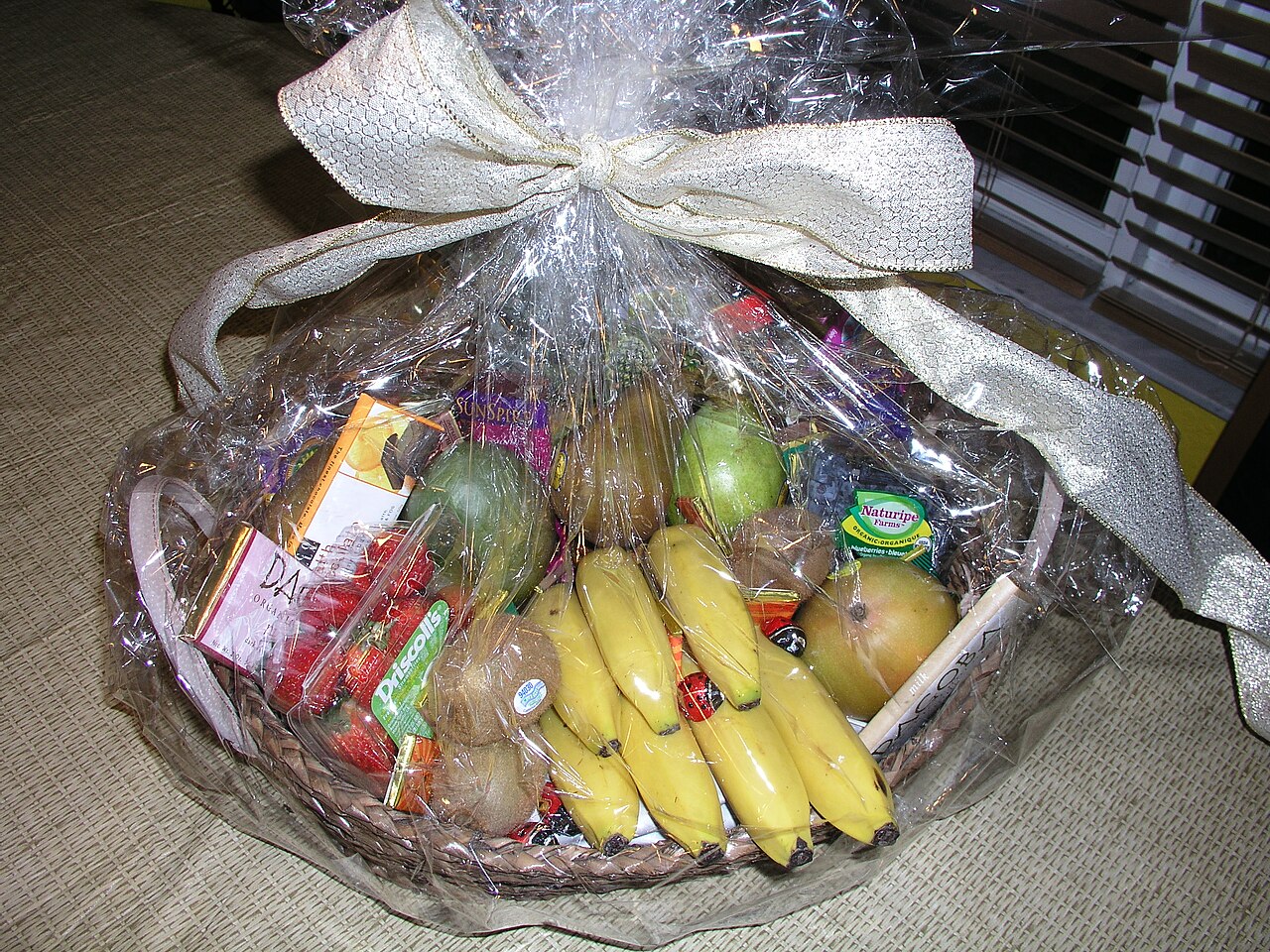
TSA has no entry for gift baskets, so the rule for each food inside applies. A basket of cookies and a bar of chocolate is a yes. Add a jar of jam over 3.4 ounces and that jar has to be in the checked bag.
Officers can ask you to take food out of a carry-on so the X-ray image is clear. TSA’s advice for any gift is a bag or a box with a lid you can remove, “and avoid the possibility of opening fully wrapped presents.” More on that in wrapped gifts.
Coming home through US customs
If you’re flying in from another country, CBP’s page on prohibited items says: “You may bring bakery items and certain cheeses into the United States.” It says many prepared foods are admissible and that almost anything containing meat is not. It doesn’t mention chocolate, candy or cookies by name.
CBP’s agriculture page says to declare agricultural items on the declaration form, and that civil penalties for failing to declare prohibited items “may range up to $1,000 per first-time offense for non-commercial quantities.” What happens if you don’t declare.
On the way home you also go through the other airport’s screening first, and its rules are the ones that count there.

TSA puts this on every entry: “The final decision rests with the TSA officer on whether an item is allowed through the checkpoint.”